
Key Takeaways
This guide explains how to unclog a kitchen sink at home using safe methods and when to call a Guildford plumber for stubborn blockages.
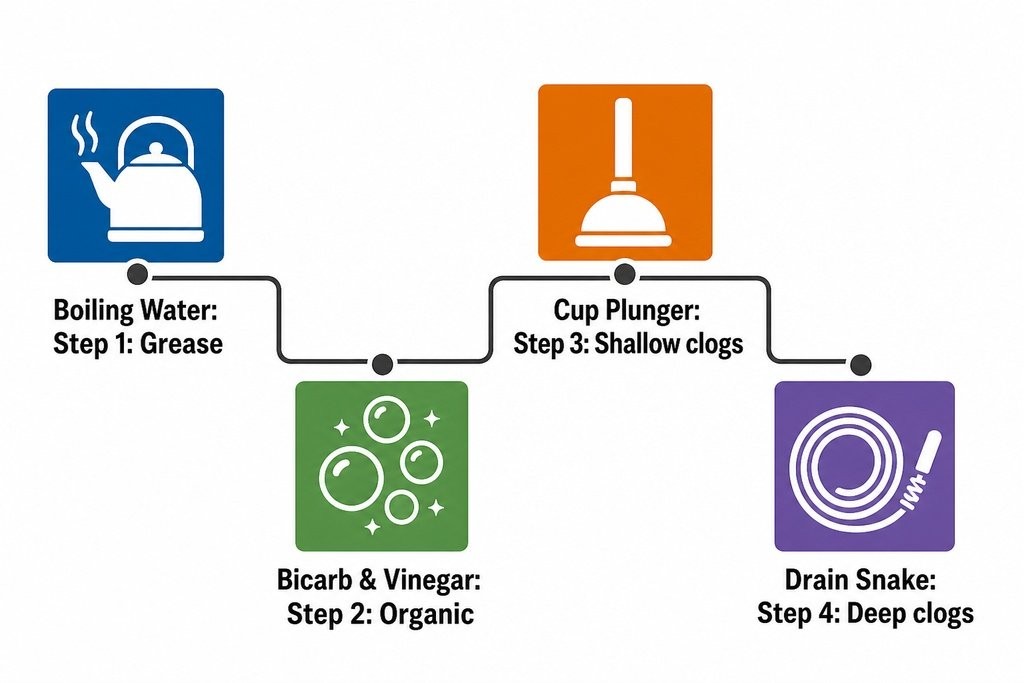
- Start with the least invasive approach: boiling water works well on fresh grease, followed by bicarbonate of soda and white vinegar for soft organic deposits, then a cup plunger for partial or full shallow blockages.
- A manual drain snake is the right tool for deeper blockages beyond the U-bend; use slow and controlled movements on plastic waste pipes to avoid causing damage.
- Avoid chemical drain cleaners where possible as they can corrode older metal pipes and weaken plastic joints, and must never be mixed with other cleaning products.
- Call a professional plumber if blockages recur, multiple fixtures are affected, dampness appears under the sink, or both sides of a double basin are blocked at the same time.
- Prevent future blockages by keeping fats and oils out of the drain, running hot water after washing up, and doing a monthly bicarbonate of soda flush to keep pipes clear.
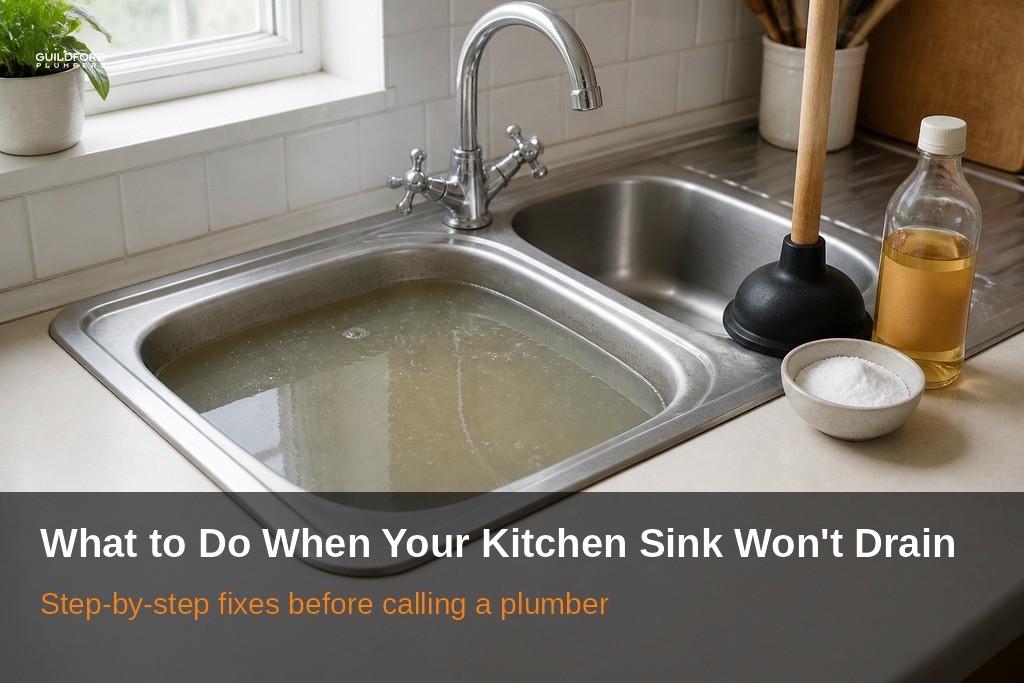
Few household problems are as frustrating as standing in front of a full basin of murky water waiting for it to shift. When your kitchen sink is clogged, it can feel urgent, and it is not always obvious where to begin. The good news is that most blockages follow a predictable pattern, so there are logical steps you can take to resolve them, along with clear signs that tell you when to stop and call in a professional.
This guide covers everything you need to know: diagnosing the likely cause, choosing the right method, avoiding common mistakes that make things worse, and knowing when a Guildford plumber is the faster, smarter option.
Why Is My Kitchen Sink Not Draining?
Most kitchen sink blockages come down to the same handful of culprits. Grease, cooking oil, and fat flow down the drain as liquids but solidify as they cool, gradually narrowing the pipe. Food debris, coffee grounds, and soap residue layer on top, creating a dense, sticky mass that eventually stops water flowing altogether. According to cited research from The Kitchn, kitchen sink clogs are caused most commonly by grease, oil, fat, food waste, coffee grounds, and soap residue accumulating in pipes, confirming what most experienced plumbers see daily. In Guildford and the wider Surrey area, hard water is particularly prevalent, and the mineral scale it leaves behind can reduce the internal diameter of older pipes over time, making blockages more likely and more stubborn.
Before doing anything, consider where the blockage is sitting. A shallow clog near the plughole or in the U-bend is likely to respond to simple home remedies. A deeper clog in the pipe running through the wall or connecting to the main drain stack usually requires professional tools to clear safely.
Why Are Both Kitchen Sinks Clogged at the Same Time?
If you have a double kitchen sink and both basins have stopped draining simultaneously, the blockage almost certainly is not at the surface. Both sides share a common trap and waste pipe further downstream. A blockage at that shared junction prevents water from moving in either basin. This type of clog is less likely to respond to DIY methods, and applying pressure on one side without addressing the shared pipe can push debris deeper into the system.
How to Assess the Blockage Before You Start
Take a moment to observe what is actually happening before reaching for a plunger or pouring anything down the drain. Slow drainage over several minutes suggests a partial blockage, which means you have caught it early. Completely still water with no movement points to a full obstruction. A sulphurous or rotten smell usually means trapped food waste or stagnant water in the U-bend. Gurgling sounds from the plughole or a nearby basin suggest air is being displaced by a blockage in shared pipework.
These signs help you judge whether the problem is localised under your sink or sits further along the drainage system. Simple household methods work well for partial, shallow clogs. Deeper or recurring blockages need more than a home remedy.
| Symptom | Likely Location | Recommended First Step |
|---|---|---|
| Slow drainage over several minutes | Partial, shallow blockage near plughole or U-bend | Boiling water or bicarbonate of soda and vinegar |
| Completely still water, no movement | Full obstruction, likely in U-bend or just beyond | Plunger or drain snake |
| Sulphurous or rotten smell | Trapped food waste or stagnant water in U-bend | Bicarbonate of soda and vinegar flush |
| Gurgling sounds from plughole or nearby basin | Shared pipework, deeper in the drainage system | Call a professional plumber |
| Both sinks of a double basin blocked simultaneously | Shared trap or waste pipe downstream | Call a professional plumber |
How to Unclog a Kitchen Sink at Home
Work from the least invasive method upwards, rather than jumping straight to chemicals or forcing the blockage with the wrong tool.
Step 1: Try Boiling Water First
If the blockage is likely caused by grease, start here. Pour boiling water carefully and directly down the plughole in two or three stages, pausing between each pour to let it work. Brian Toward, CEO of Wholesale Domestic recommends this as a first step: “If your kitchen sink might be blocked by grease and cooking oils, try pouring some boiling water down the plughole.” This method is free, safe for most pipe materials, and surprisingly effective on fresh grease build-up.
Step 2: Use Bicarbonate of Soda and White Vinegar
If boiling water alone does not shift the blockage, this natural, chemical-free combination is widely recommended for loosening stubborn deposits. Pour half a cup of bicarbonate of soda down the drain, follow immediately with half a cup of white vinegar, then place the plug in to direct the fizzing reaction downward. Leave for at least twenty minutes, then flush with hot water. The reaction helps break apart soft organic matter without damaging your pipework.
Step 3: Plunge the Kitchen Sink Correctly
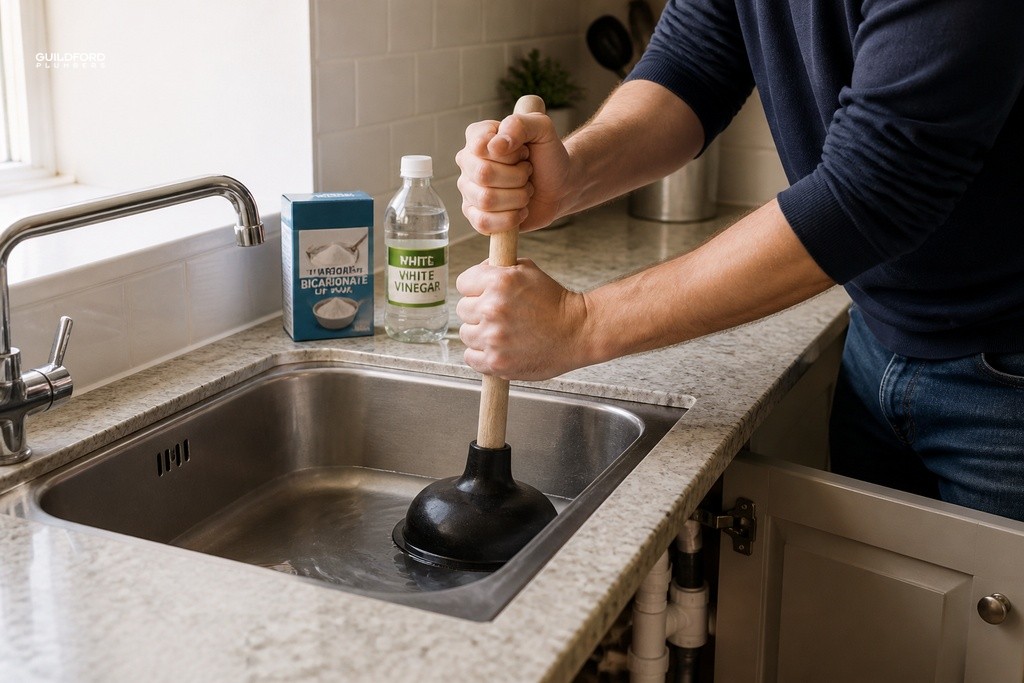
Plunging is one of the most effective DIY methods when done properly. Use a cup plunger rather than a toilet plunger, as the flat cup creates a better seal against a kitchen drain. Fill the basin with enough water to cover the cup, creating hydraulic pressure rather than just pushing air. If you have a double sink, block the second plughole firmly with a damp cloth to stop pressure escaping. Place the plunger squarely over the drain, press down to remove air, then use firm, rhythmic push-and-pull strokes for about thirty seconds. Repeat two or three times and run the tap to check whether drainage has improved.
Step 4: Use a Drain Snake for Deeper Blockages
A drain snake (also called a hand auger) is the right tool when plunging has not worked and the blockage feels more stubborn or sits deeper in the pipe. Feed the cable end slowly into the drain and rotate the handle gently as you push forward. When you feel resistance, work the snake back and forth to break up or hook the obstruction rather than forcing it further down. Plastic waste pipes, common under kitchen sinks in homes across Guildford and Surrey, can be scratched or cracked with too much rotational force, so use slow, controlled movements and avoid powered augers on lightweight plastic fittings.
| Method | Best For | Effort Required | Risk to Pipework |
|---|---|---|---|
| Boiling water | Fresh grease or oil build-up | Low | Very low |
| Bicarbonate of soda and white vinegar | Soft organic deposits, mild blockages | Low | Very low |
| Cup plunger | Partial to full shallow blockages | Medium | Low (if used correctly) |
| Manual drain snake | Deeper blockages beyond the U-bend | Medium to high | Low to medium (avoid powered augers on plastic) |
What to Avoid When Your Kitchen Drain Is Blocked
Chemical drain unblockers are widely available, but they carry significant drawbacks. Most are highly caustic and can corrode older metal pipework or weaken plastic joints with repeated use. They must never be mixed with other cleaning products, as this can produce dangerous gases. If the drain remains blocked after using a chemical cleaner, a plumber will need to handle a pipe full of corrosive liquid, which can complicate what might otherwise have been a straightforward job.
Equally important: avoid repeating the same ineffective method with more force. Plunging too aggressively at a pipe junction can push debris deeper into the system, turning a simple kitchen pipe clog into a problem beyond DIY reach. If two or three careful attempts have not shifted the blockage, stop and seek professional help.
When Should You Call a Plumber for a Blocked Kitchen Sink?
Some blockages are simply beyond what home methods can safely resolve. Call a professional plumber if you notice recurring clogs that return within days or weeks of clearing, as this suggests heavy scale build-up, a partial pipe collapse, or persistent grease that surface methods cannot reach. Other warning signs include multiple fixtures not draining, foul smells from floor-level drains, visible dampness under the sink cabinet, or both sinks blocked at the same time with no response to DIY methods.
Calling a professional at this stage is often more cost-effective than continuing with fixes that do not address the root cause. The longer a partial blockage is left, the more likely it is to become a full obstruction or place strain on pipe joints and seals.
How Guildford Plumbers Clear Blocked Kitchen Drains in Surrey
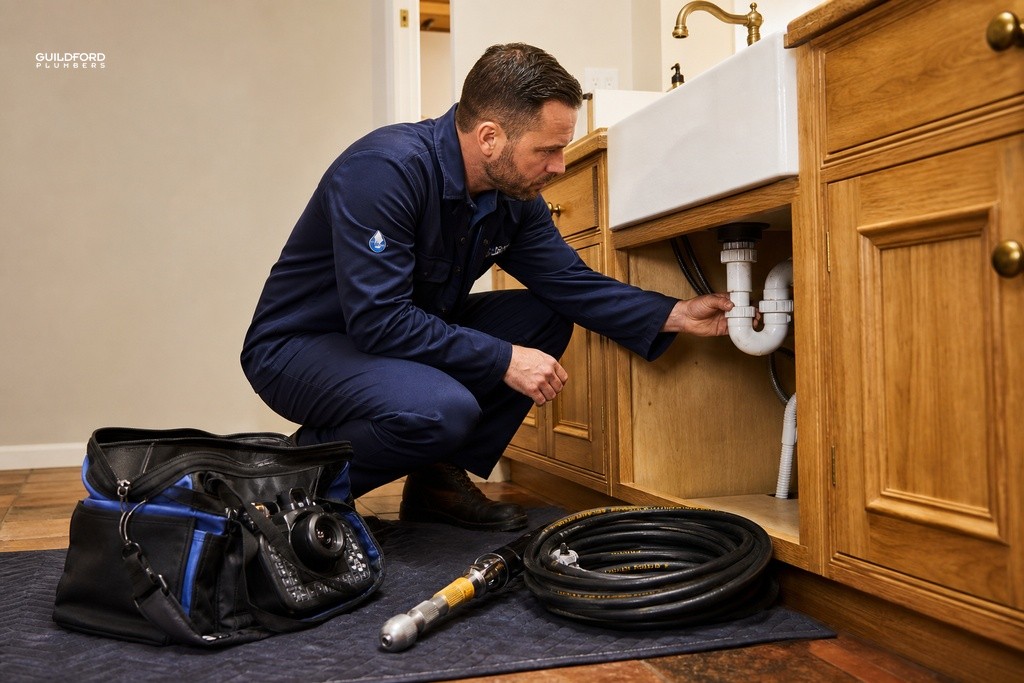
When the team at Guildford Plumbers responds to a blocked kitchen drain, the process begins with a proper diagnosis rather than immediately applying pressure to the system. Engineers assess where the blockage is likely to sit based on the symptoms you describe, check the condition of the visible waste pipework under the sink, and use appropriate professional tools to clear the obstruction safely.
For deeper blockages in shared drainage, high-pressure water jetting can clear grease and debris from pipe walls in a way that hand tools simply cannot match, restoring full flow rather than just creating a temporary passage through the clog. This is particularly useful in older Surrey properties, where years of hard-water scale and grease accumulation can build up considerably inside pipework.
Guildford Plumbers is available around the clock with no call-out fee, so you will not face a penalty for calling outside business hours when the problem cannot wait. With over 12 years of experience serving homes and businesses across Guildford and Surrey, the team understands local drainage conditions, including the effects of the region’s hard water on pipe scale, and provides honest aftercare advice so the same problem does not return. Free quotes are available before any work begins, so there are no surprises on cost.
How to Keep Your Kitchen Drain Clear Going Forward
Once you have managed to unblock your kitchen sink, a few straightforward habits will significantly reduce the risk of it happening again. Keep fats, oils, and cooking grease away from the sink entirely. Let them cool and solidify in a container, then dispose of them in the general waste bin. Run hot water for a full minute after washing up each evening to flush residue before it cools and adheres to pipe walls. Avoid putting coffee grounds, fibrous vegetable waste, or starchy foods such as rice or pasta down the drain. A monthly maintenance flush with bicarbonate of soda and hot water will help keep the pipe clear between deeper cleans.
Research by the CCW (Consumer Council for Water) found that kitchen sink use is largely subconscious, with drain events happening throughout the day without homeowners noticing, which is precisely how small amounts of grease and debris accumulate unnoticed over weeks and months.
If your kitchen sink is giving you trouble and home methods have not resolved it, the team at Guildford Plumbers is ready to help any time of day. Get in touch for a free, no-obligation quote and fast local service from engineers who know Guildford and the surrounding Surrey area well.
Frequently Asked Questions About Unclogging a Kitchen Sink
What is the most effective way to unclog a kitchen sink at home?
Start with boiling water, then try bicarbonate of soda and white vinegar, and follow up with a cup plunger if needed. Working through each method in order, from least to most forceful, gives you the best chance of clearing the blockage without damaging your pipework.
Can I use chemical drain cleaners on a blocked kitchen sink?
Only as a last resort. Chemical cleaners can corrode older metal pipes, weaken plastic joints with repeated use, and must never be mixed with other cleaning products. If the blockage remains afterwards, a plumber will then need to work safely around a pipe full of caustic liquid, making the job more complicated.
Why does my kitchen sink keep blocking even after I clear it?
Recurring blockages usually point to a deeper issue that surface methods cannot fully resolve, such as heavy grease build-up, mineral scale from hard water, or a partial pipe collapse. A professional plumber can use high-pressure jetting or inspection tools to identify and address the underlying cause.
When should I stop trying DIY methods and call a plumber?
Stop after two or three careful attempts without improvement. Call a plumber straight away if multiple fixtures are affected, if you notice dampness or foul smells under the sink, or if both sides of a double sink are blocked, as these signs point to a shared drainage problem beyond DIY reach.
Does hard water in Guildford and Surrey make kitchen sink blockages worse?
It can, yes. Hard water leaves mineral deposits inside pipes over time, gradually reducing their internal diameter. In older properties across Guildford and the wider Surrey area, this scale combines with grease and soap residue to make blockages more frequent and more resistant to simple home remedies.
Is it safe to use a drain snake on plastic waste pipes?
A manual drain snake used carefully is generally safe on plastic waste pipes. Use slow, controlled movements and avoid powered augers, which can generate enough rotational force to scratch or crack the lightweight plastic fittings commonly found under kitchen sinks in UK homes.