

Key Takeaways
Spotting common air conditioner problems early helps Guildford homeowners avoid costly repairs, protect indoor air quality, and know when to call a qualified engineer.
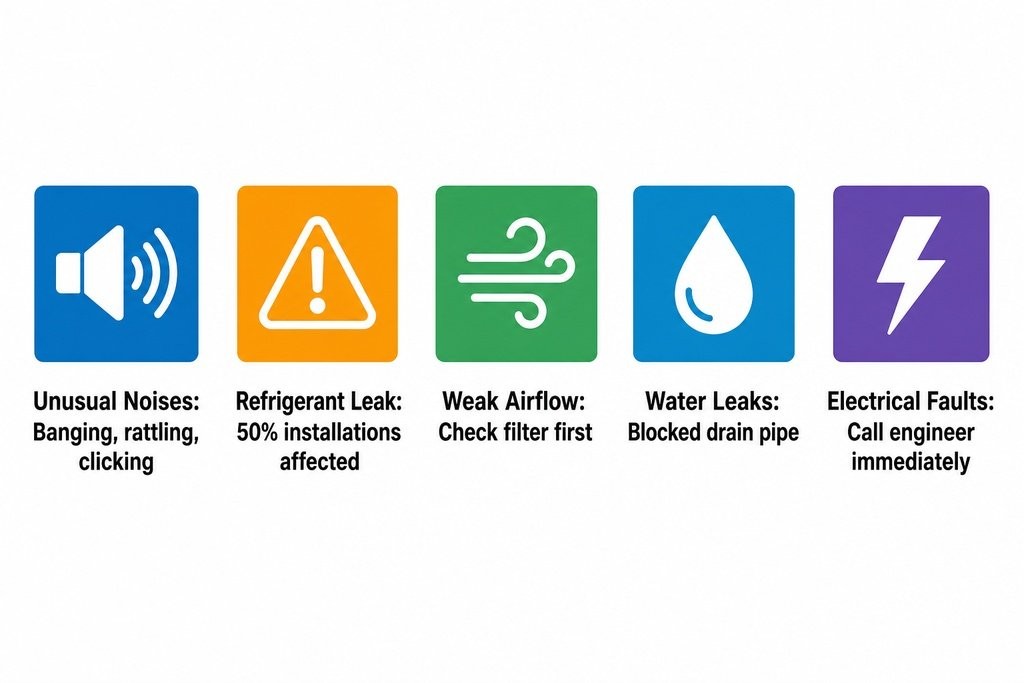
- Unusual noises such as banging, rattling, hissing, or persistent clicking are early warning signs of mechanical or refrigerant faults that should never be ignored.
- A blocked or dirty air filter is the most frequent cause of weak airflow and reduced cooling; checking and cleaning it is a safe first step any homeowner can take before calling an engineer.
- Persistent water pooling or damp patches near an indoor unit indicate a blocked condensate drain, a frozen evaporator coil, or a poorly fitted drainage tray, all of which need prompt attention.
- Refrigerant handling and internal electrical repairs are regulated activities in the UK and must only be carried out by an F Gas certified or qualified engineer.
- Annual professional servicing before the summer cooling season keeps the system efficient, reduces the risk of unexpected breakdowns, and helps protect any applicable warranty.
When your air conditioning unit starts behaving differently, it is easy to assume the problem will sort itself out. Most homeowners in Guildford and the surrounding Surrey area only think about their system when it stops working entirely, but by that point a straightforward repair has often become something far more disruptive and expensive. Recognising common air conditioner problems early gives you the best chance of resolving them quickly, keeping your home comfortable and your repair bill manageable.
This guide helps you spot the signs that something is not quite right, understand what those signs typically mean, and know when to call a professional. The symptoms covered here are things you can observe yourself, from strange sounds to damp patches on the wall, and each one points toward a clear course of action.
Why Spotting Air Conditioner Problems Early Matters
Air conditioning systems rarely fail without warning. According to research published by the U.S. Department of Energy, more than 65% of residential HVAC systems are performing below their best due to faults that often go undetected until symptoms become severe. Small inefficiencies accumulate gradually until a component gives out entirely, which is why catching early warning signs is about protecting a significant household investment before a minor fault becomes a major one.
There is also a health dimension worth taking seriously. Research published in the International Journal of Low-Carbon Technologies found that indoor air in homes can be two to ten times more polluted than outdoor air, and that poorly maintained split air conditioners can actively contribute to this degradation. Headaches, fatigue, and respiratory irritation have all been associated with neglected units. Keeping your system in good working order directly affects the air quality inside your home, not just the temperature.

Unusual Noises: What Each Sound Could Mean
A healthy air conditioning unit operates with a low, consistent hum. When that changes, the new sound is usually your system signalling a specific problem.
- Banging or clanking — almost always indicates a loose or broken component such as a fan blade or an internal part that has worked itself free over time.
- Rattling on start-up — can suggest debris inside the outdoor unit or a loose panel vibrating under the airflow.
- Clicking that continues beyond start-up — may point to a fault with the thermostat or a relay that is not engaging correctly.
None of these sounds should be dismissed. If you are asking yourself why is my air conditioner noisy, this is exactly the kind of symptom worth investigating promptly, because early mechanical faults are almost always cheaper to resolve than the failures they lead to if left unchecked.
| Sound | Likely Cause | Recommended Action |
|---|---|---|
| Banging or clanking | Loose or broken internal component (e.g. fan blade) | Switch off and arrange professional inspection |
| Rattling on start-up | Debris in outdoor unit or loose panel | Clear visible debris; call engineer if persistent |
| Clicking beyond start-up | Thermostat fault or relay not engaging | Professional diagnosis required |
| Hissing or bubbling | Refrigerant leak from sealed circuit | Switch off immediately; call F-Gas certified engineer |
Does a Hissing Sound Mean a Refrigerant Leak?
A hissing or bubbling noise from your indoor or outdoor unit is one of the more serious warning signs. It typically indicates refrigerant escaping from the sealed circuit through a crack in the pipework or a loose connection. Incorrect refrigerant charge is found in over 50% of examined residential installations, according to the Florida Solar Energy Center at the University of Central Florida, making it one of the most common cooling system issues in domestic properties. Refrigerant leaks reduce cooling capacity and pose environmental and safety risks. Handling refrigerants in the UK is a regulated activity that must be carried out by an F-Gas certified engineer, so if you hear this sound, switch the unit off and arrange a professional inspection without delay.
Weak Airflow: Causes and First Steps
If the air from your unit feels weaker than usual, or some rooms cool well while others remain stuffy, this is a clear early-stage fault that deserves attention.
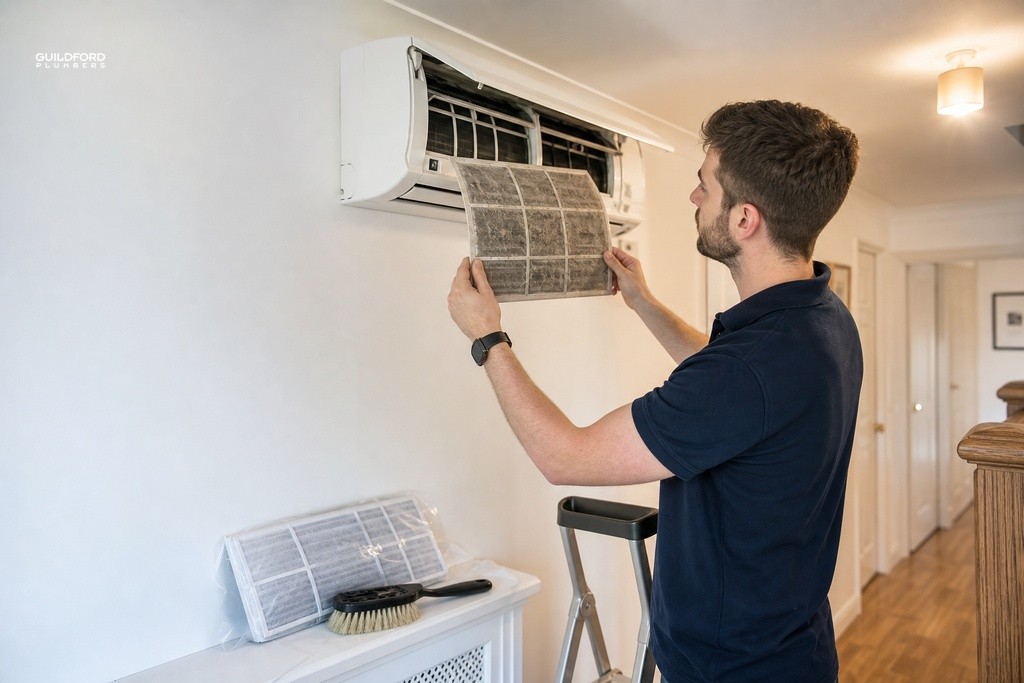
The most common cause is a blocked or dirty air filter. Filters that have not been cleaned or replaced in several months restrict airflow significantly, forcing the system to work harder for a poorer result. Checking and cleaning your filter is something most homeowners can do themselves, and it is always worth doing before calling an engineer. If you are wondering why is my air conditioner not cooling, start here. Beyond the filter, weak airflow can also result from a frozen evaporator coil, a failing fan motor, or blocked ductwork.
Temperature irregularities, such as warm air from vents or inconsistent temperatures between rooms, are among the earliest and most reliable indicators of an underlying fault. If cleaning the filter makes no noticeable difference, the problem likely lies deeper in the system and needs professional diagnosis.
Water Leaks and Damp Patches: Should You Be Worried?
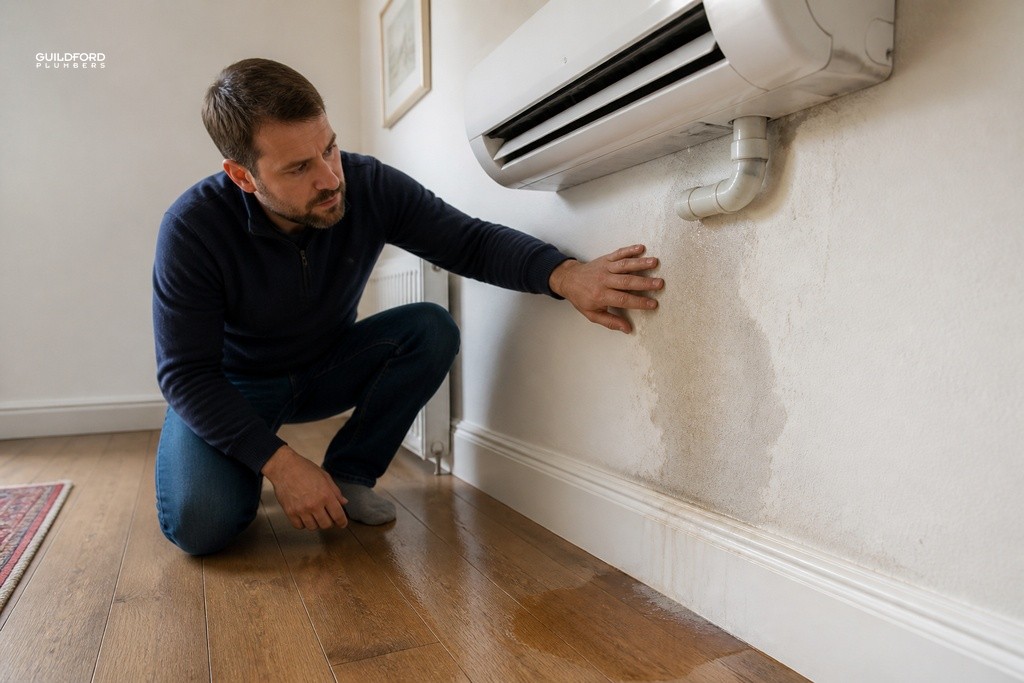
Discovering a puddle beneath your indoor unit, or noticing a damp patch on a nearby wall, is something many homeowners put down to condensation. A small amount of condensation on pipework is entirely normal, but persistent water pooling or visible damp spreading across a wall surface is not something to leave unchecked.
If you are wondering why is my air conditioner leaking water, the most common causes are a blocked condensate drain pipe, a frozen evaporator coil that has started to thaw, or a poorly fitted drainage tray allowing water to escape in the wrong direction. In homes across Guildford and the wider Surrey area, where older construction methods and existing moisture issues can make buildings more vulnerable, this kind of water ingress can cause significant damage to plasterwork, insulation, and structural timbers if left unaddressed. Acting quickly when you notice water where it should not be is always the right decision.
Electrical Faults: Warning Signs That Need Professional Attention
Electrical warning signs tend to cause more concern than mechanical ones, and with good reason. The following symptoms all indicate that something in the electrical system requires professional attention.
- The unit repeatedly trips the circuit breaker — usually means the system is drawing more current than it should, pointing to a failing compressor, a wiring fault, or a capacitor on its way out.
- No response from the remote control or wall panel — worth checking the basics first, but persistent unresponsiveness suggests an electrical fault.
- A burning or acrid smell when running — switch the unit off immediately, particularly if this occurs after a period of inactivity.
Checking that the unit is receiving power, confirming the remote has working batteries, and ensuring the circuit breaker has not simply tripped once are all sensible first steps. Beyond that, electrical faults must be handled by a qualified professional.
What You Can Check Yourself and When to Call an Engineer
There is a reasonable amount a homeowner can check without specialist tools or training. Safe checks include inspecting and cleaning air filters, clearing leaves or debris from around the outdoor unit, confirming that nothing is blocking the indoor vents, and resetting the thermostat. A structured air conditioner troubleshooting guide will typically walk you through these steps before recommending professional help.
There are, however, clear boundaries that should not be crossed. Anything involving refrigerant, internal electrical components, or the sealed compressor circuit must be handled by a qualified engineer. In the UK, this means F-Gas certification for refrigerant work and, where gas appliances are also involved, Gas Safe Registration. Attempting to interfere with these systems without the correct credentials is not only dangerous but illegal in certain circumstances. If a symptom persists after your own basic checks, that is the point to call a professional.
| Task | Can a Homeowner Do This? | Why |
|---|---|---|
| Clean or replace air filter | Yes | No specialist tools or training required |
| Clear debris from outdoor unit | Yes | Safe external maintenance task |
| Check vents are unobstructed | Yes | Visual inspection only |
| Reset thermostat | Yes | Standard user-level control |
| Refrigerant handling or recharging | No — F-Gas certified engineer only | Legal requirement in the UK |
| Internal electrical components | No — qualified engineer required | Safety risk; potential legal liability |
| Sealed compressor circuit | No — qualified engineer required | Specialist equipment and certification needed |
How Guildford Plumbers Diagnose and Fix AC Faults Across Surrey
Guildford Plumbers has been providing air conditioning services guildford homeowners and businesses rely on for over 12 years, with a team of qualified engineers who understand the systems most commonly installed across Surrey, from Guildford town centre and Godalming to Woking, Cranleigh, and the villages in between. When an engineer attends an air conditioning job, the process begins with a thorough visual and functional assessment of the whole system, not just the component causing the immediate problem. This broader approach matters because common air conditioner problems are rarely isolated: a noisy unit may also show signs of reduced airflow or minor refrigerant issues that would not be obvious to the untrained eye.
There is no call-out fee for attending the property, and all assessments come with a free, transparent quote before any work begins. Whether you have noticed a worrying sound, a damp patch near the indoor unit, or a gradual drop in cooling performance, the right response is always to have it looked at sooner rather than later. Guildford Plumbers offers fast response times and is available around the clock for situations that cannot wait. If your system has been showing any of the warning signs covered in this guide, get in touch today for a no-obligation assessment from a team that knows Guildford and the surrounding Surrey area inside out.
Frequently Asked Questions About Common Air Conditioner Problems
What are the most common air conditioner problems in UK homes?
The most common issues are dirty or blocked air filters, refrigerant leaks, frozen evaporator coils, blocked condensate drain pipes, and electrical faults such as a tripping circuit breaker. Most develop gradually and produce early warning signs, including weak airflow, unusual noises, or damp patches, before the system fails completely.
Can I fix an air conditioner problem myself?
You can safely clean or replace air filters, clear debris from around the outdoor unit, check that vents are unobstructed, and reset the thermostat. Anything involving refrigerant or internal electrical components must be left to a qualified engineer. Working with refrigerants without F-Gas certification is a legal requirement in the UK.
Why is my air conditioner making a hissing noise?
A hissing or bubbling noise usually indicates a refrigerant leak from the sealed circuit. Switch the unit off and arrange an inspection by an F-Gas certified engineer. Running the system with a refrigerant leak reduces cooling efficiency and can cause further damage to the unit.
Why is water leaking from my indoor air conditioning unit?
The most common causes are a blocked condensate drain pipe, a frozen evaporator coil beginning to thaw, or a poorly fitted drainage tray. A small amount of condensation on pipework is normal, but persistent pooling or damp spreading across a wall surface warrants a professional inspection.
How often should an air conditioning unit be serviced?
Most manufacturers and engineers recommend a professional service at least once a year, typically before the summer cooling season. Regular servicing keeps the system running efficiently, reduces the risk of unexpected breakdowns, and is often required to maintain any applicable warranty.
When should I call a professional air conditioning engineer?
Call a professional if basic checks such as cleaning the filter, resetting the thermostat, and clearing vents make no difference, or if you notice electrical warning signs including tripped breakers, burning smells, or complete loss of response. Refrigerant-related symptoms, such as hissing sounds or a significant drop in cooling, should always be assessed by a qualified engineer without delay.